
Lewiston’s Hot August Nights
2026
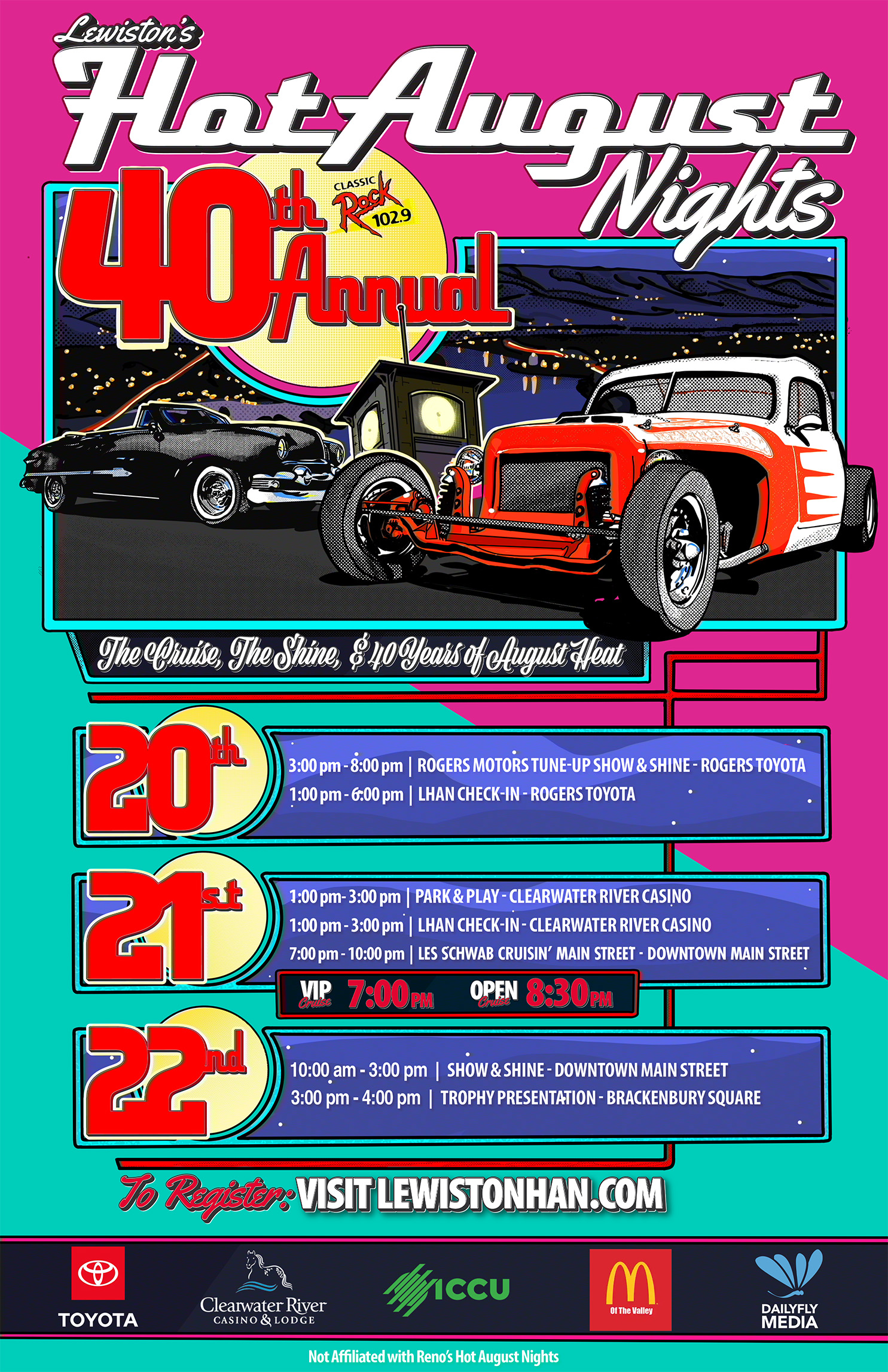
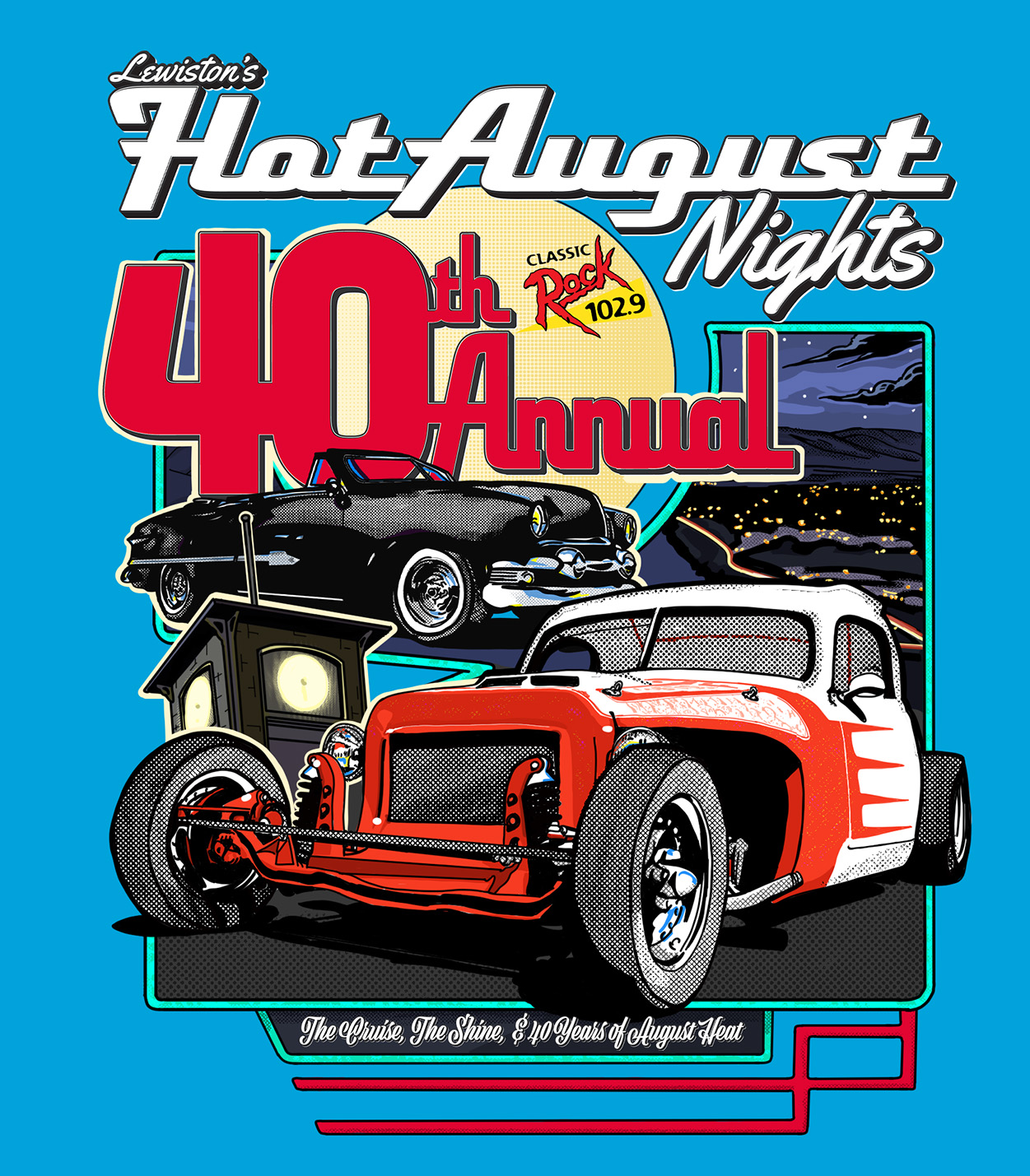
Lewiston's Hot August Nights is a classic and custom car show hosted in downtown Lewiston. The design work for this event spans a variety of print and social media materials, as well as all custom items attendees receive with their registration. It also extends to video advertising. Each of these elements is guided by the annual design theme.
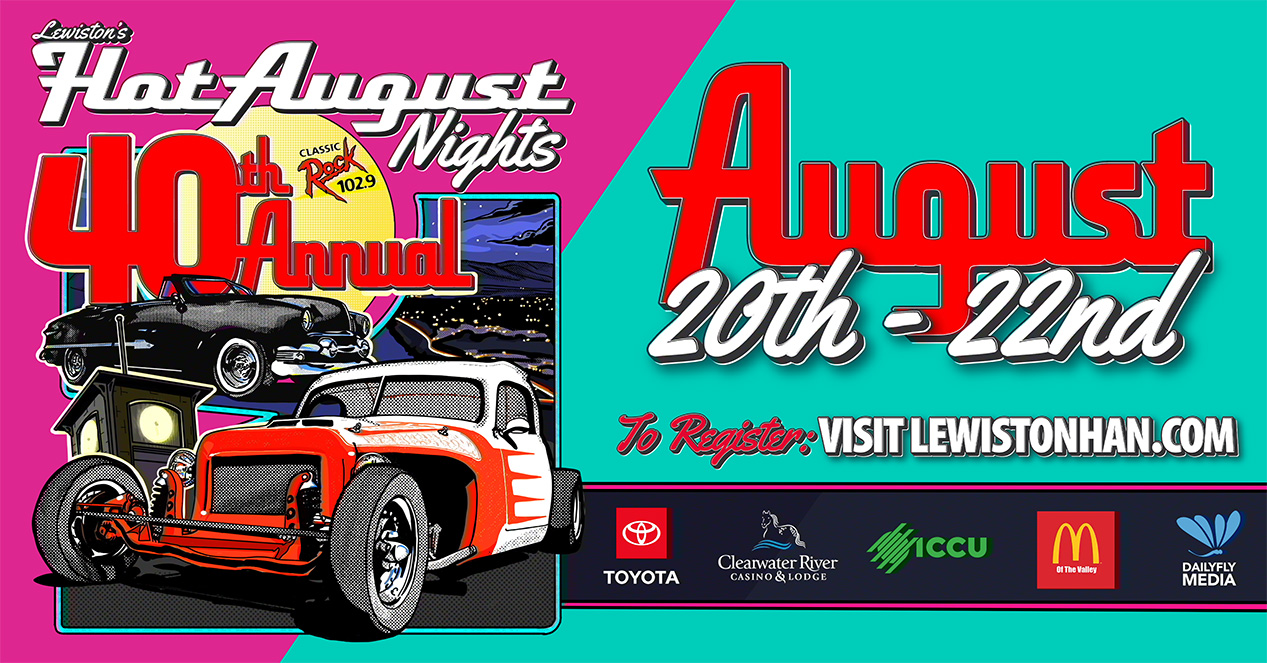
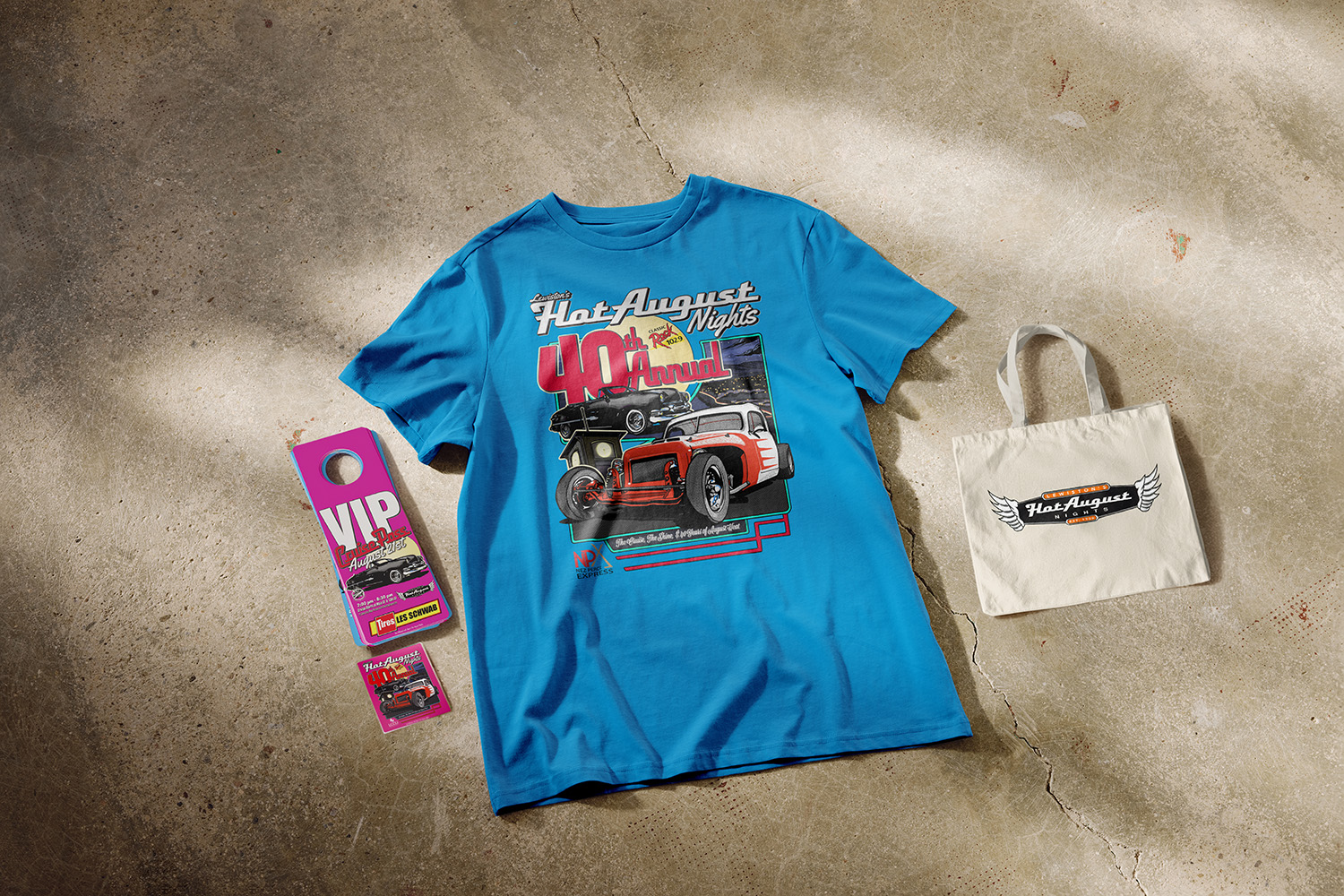
The main concept behind the design for Lewiston's Hot August Nights 2026 was a throwback to previous years in celebration of the event’s 40th anniversary. The design process began by collecting and referencing photographs of shirt designs from past events. The core concept originated with the event shirt, which was hand-drawn in Fresco using 1990s shirt designs as inspiration. The remaining final designs were completed using a VHS-style plugin to add additional texture and visual character to both print and social media materials.
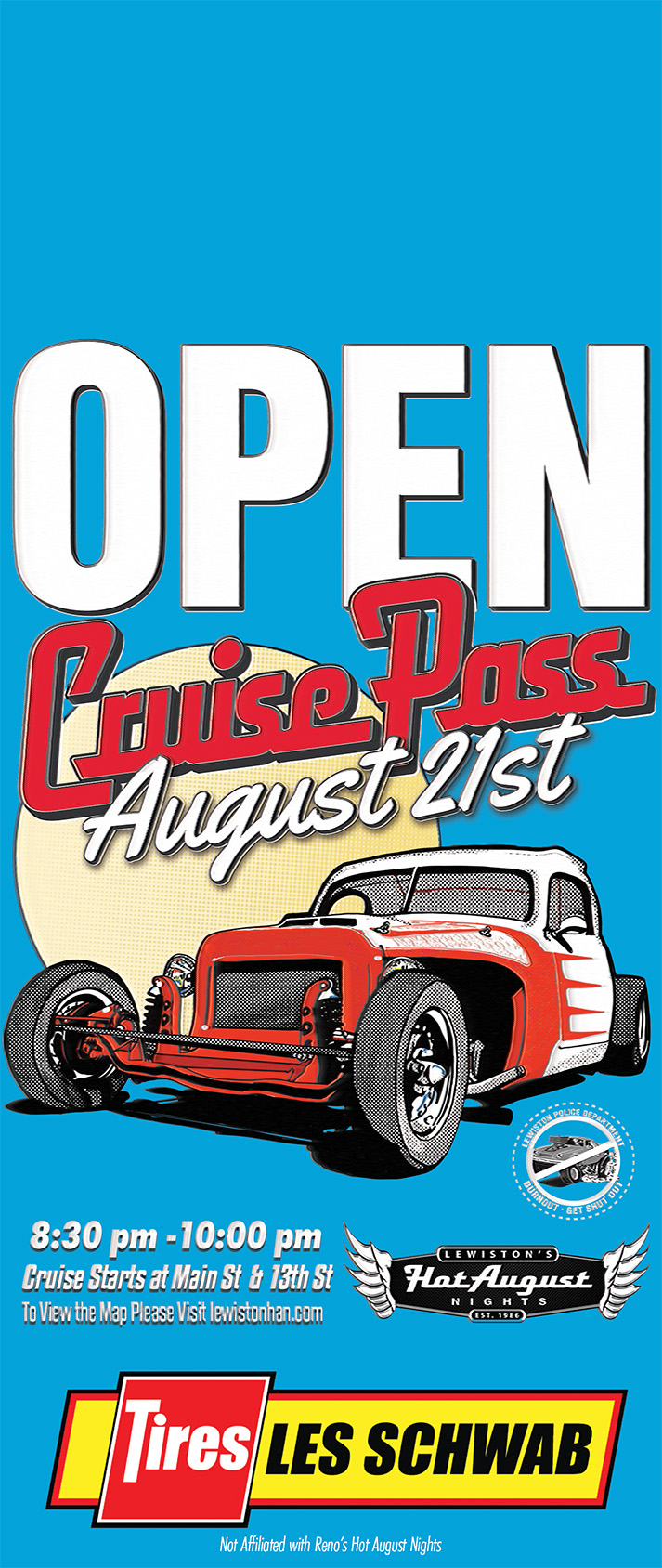
Open Cruise Pass
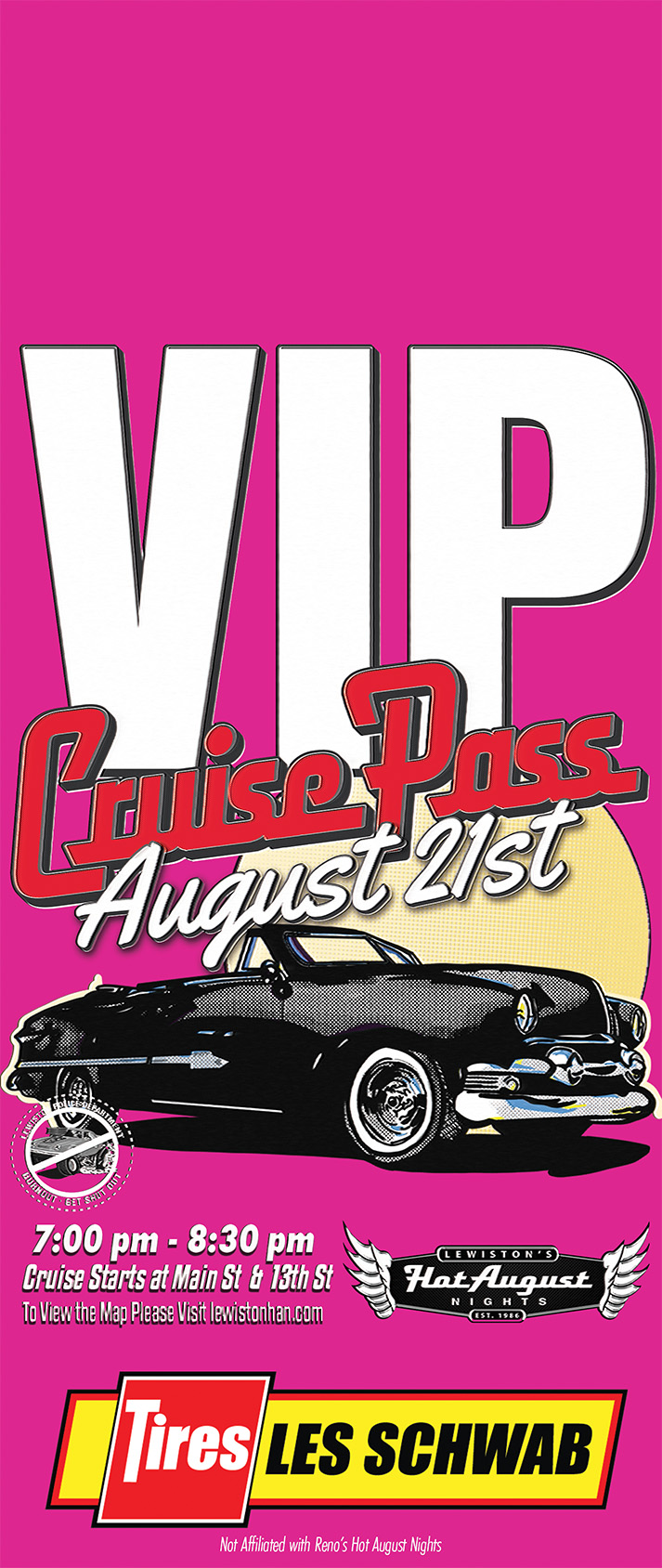
VIP Cruise pass
Shirt Design - Mockup
Shirt design
Video
2025
Poster
Attendee MAP
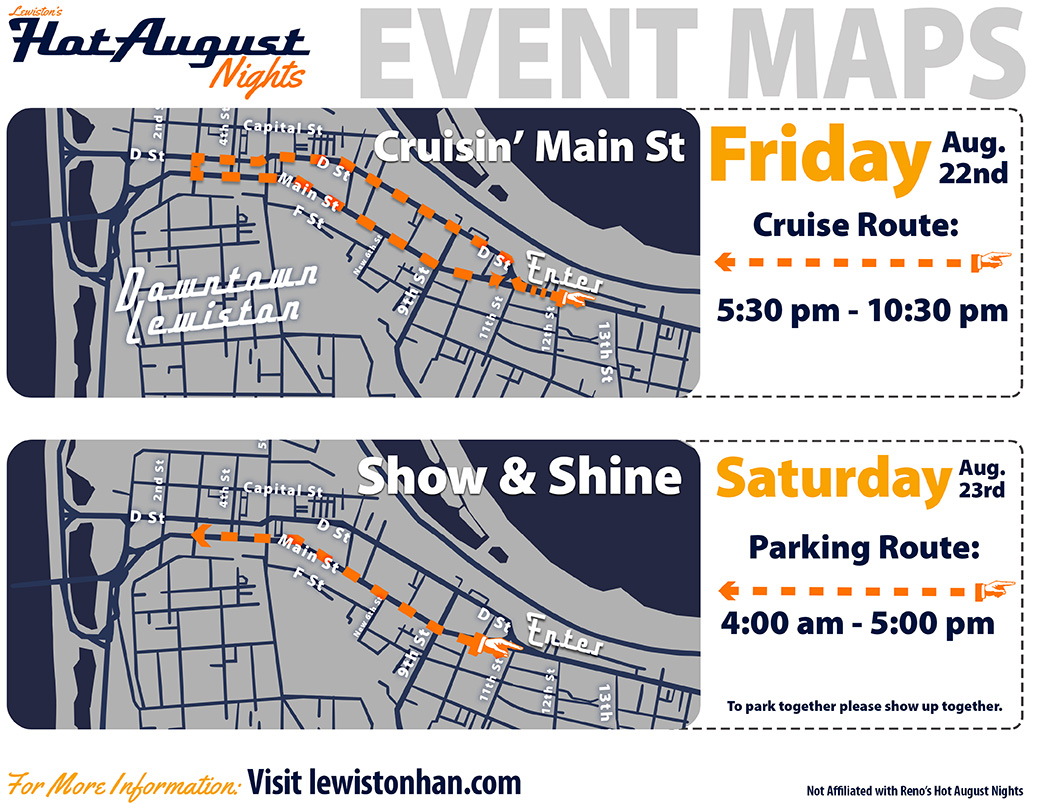
Newsfeed Post
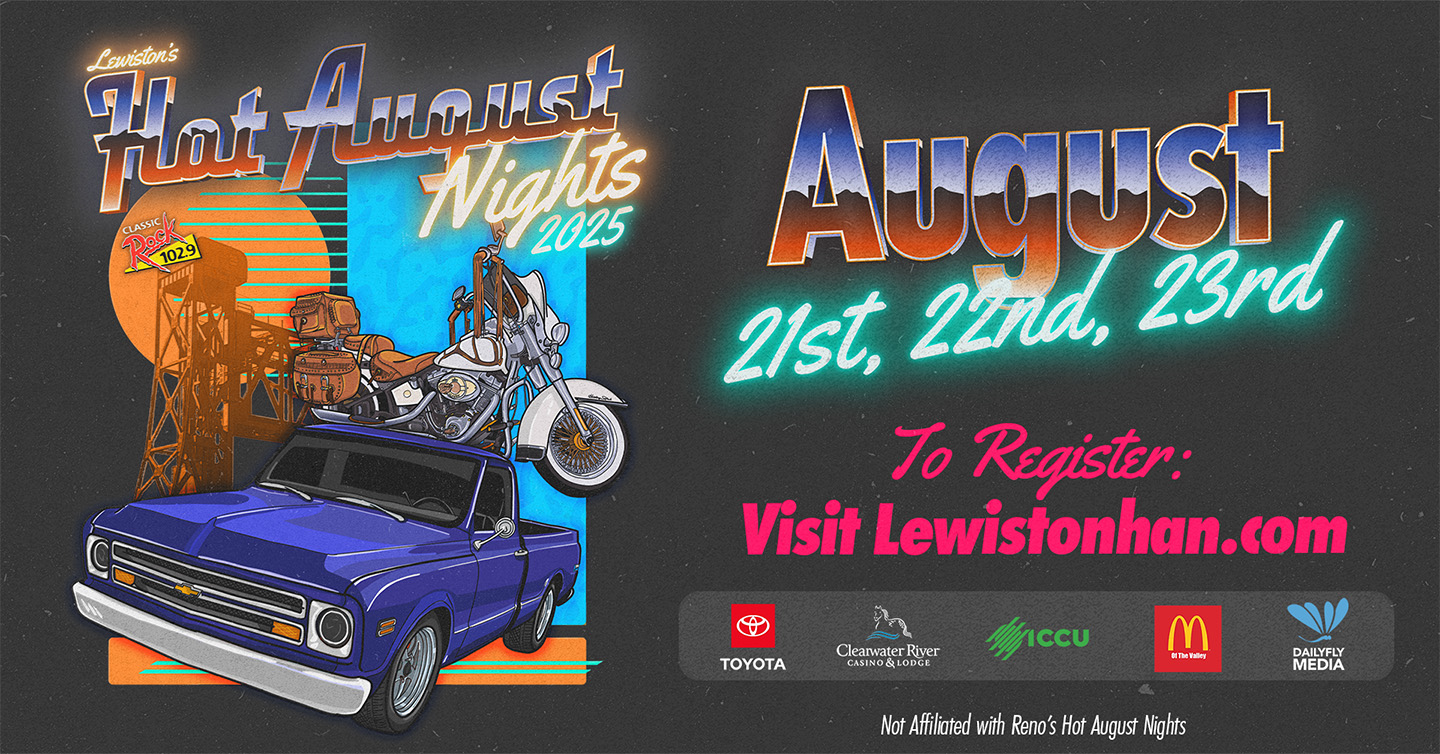
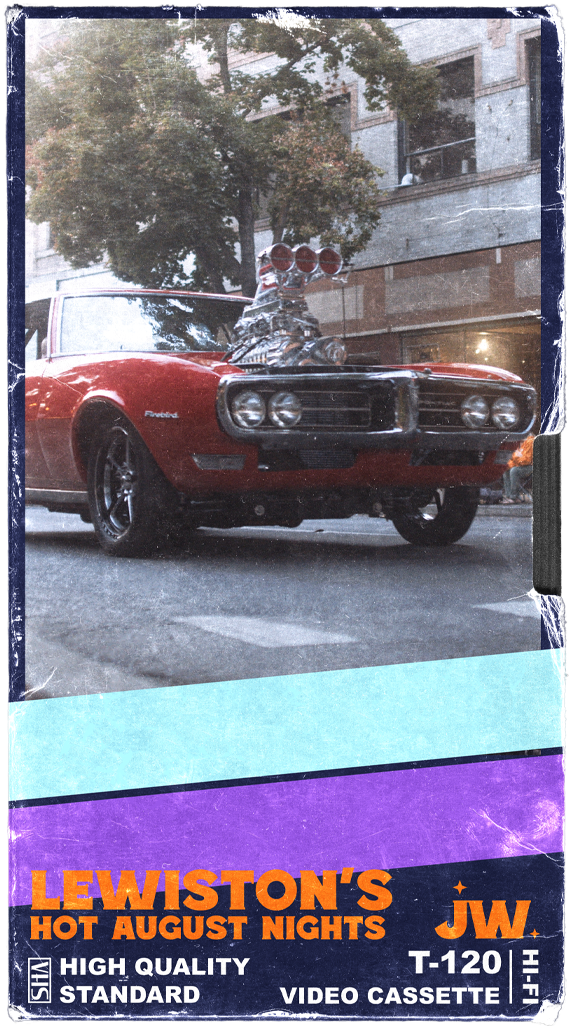
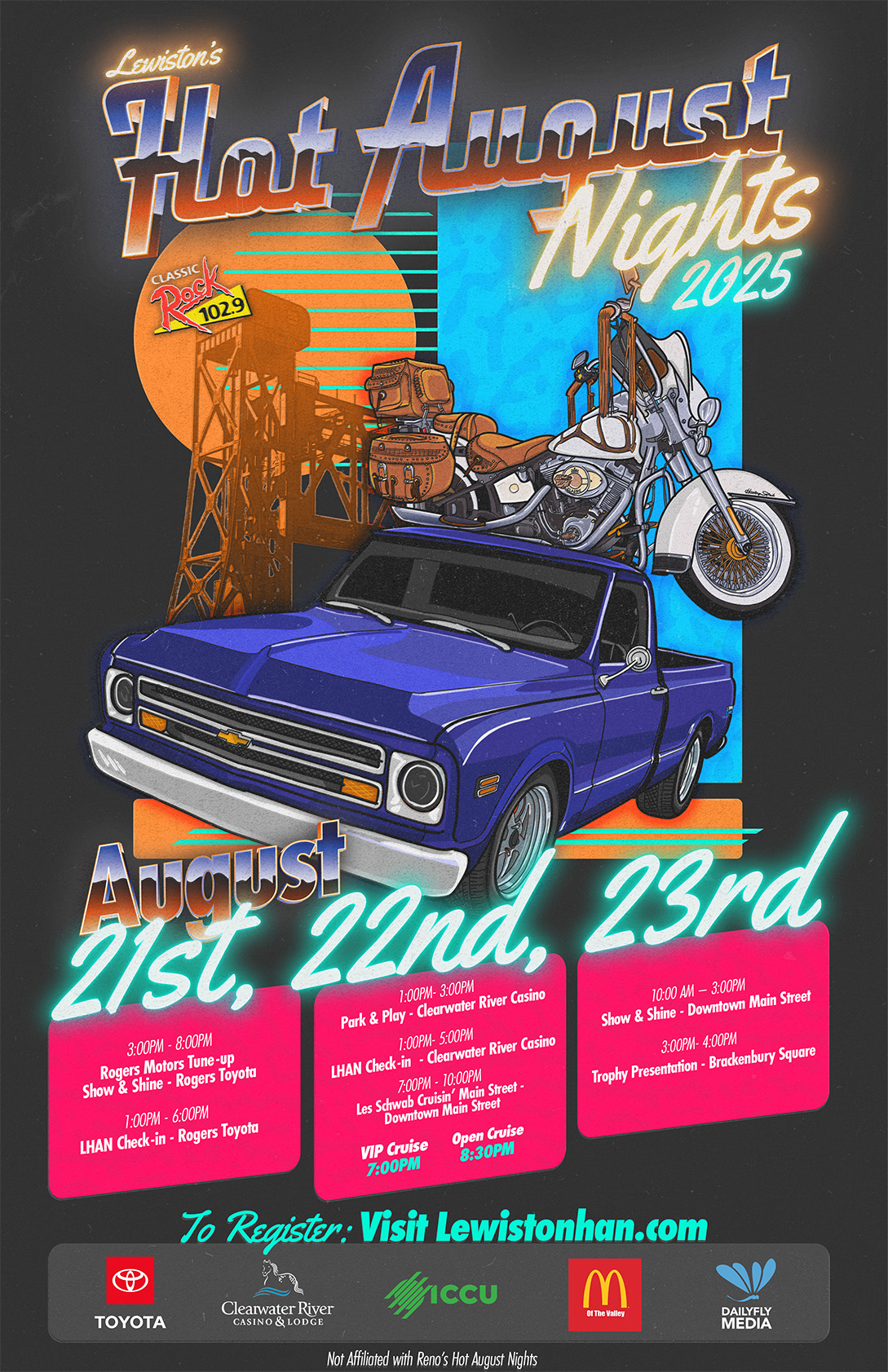
For Lewiston's Hot August Nights 2025, significant changes were made to nearly every element of the event. These updates included launching a new website, developing refreshed core designs such as the attendee map, and designing the event shirt internally for the first time instead of outsourcing it to a screen printer. The process began with a brand refresh and expanded from that foundation. All of this work was completed while building a stronger organizational framework for future events.
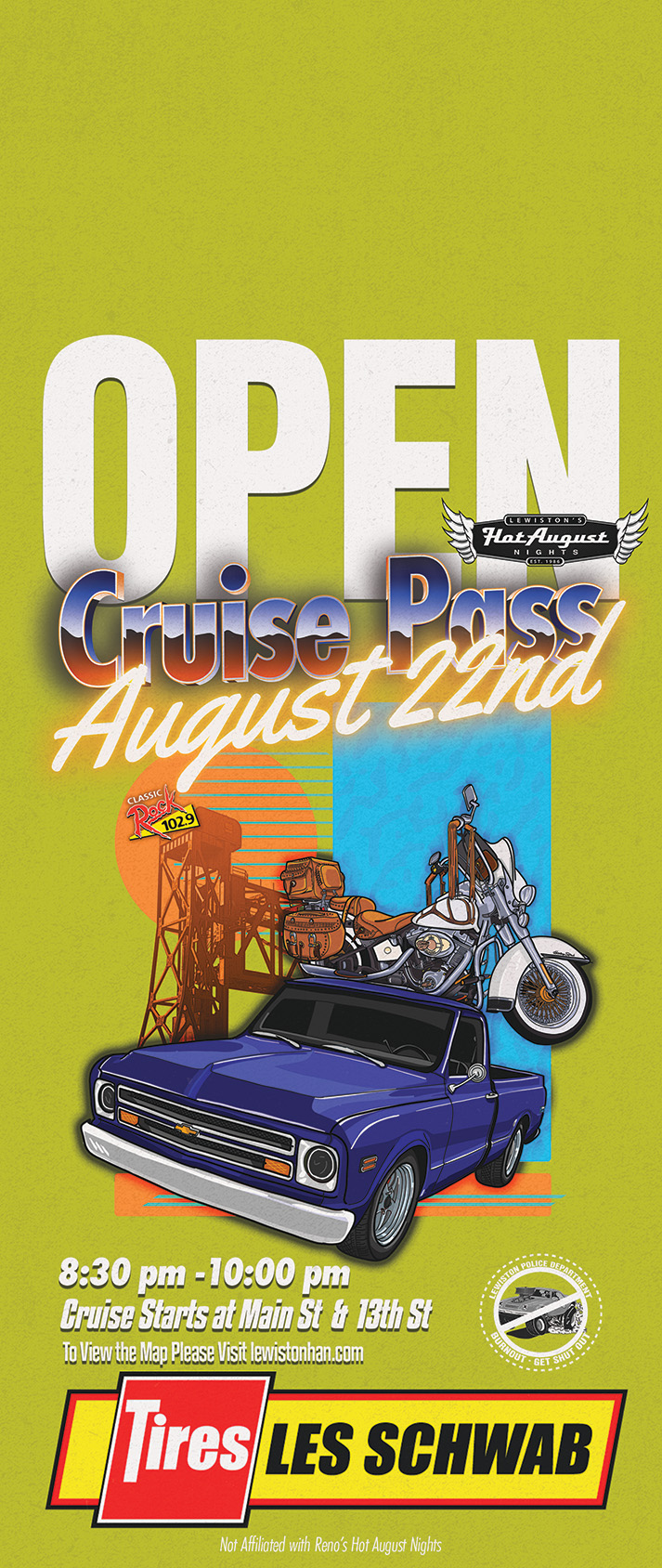
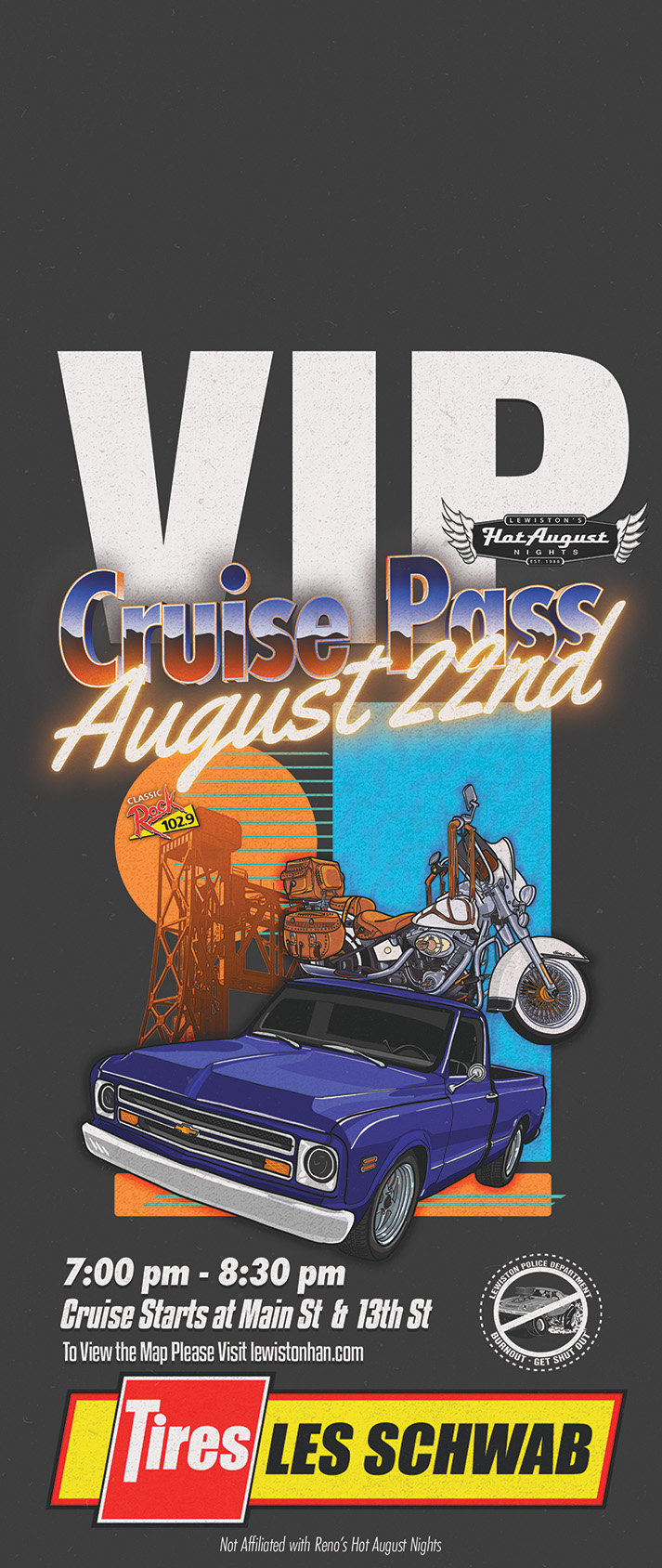
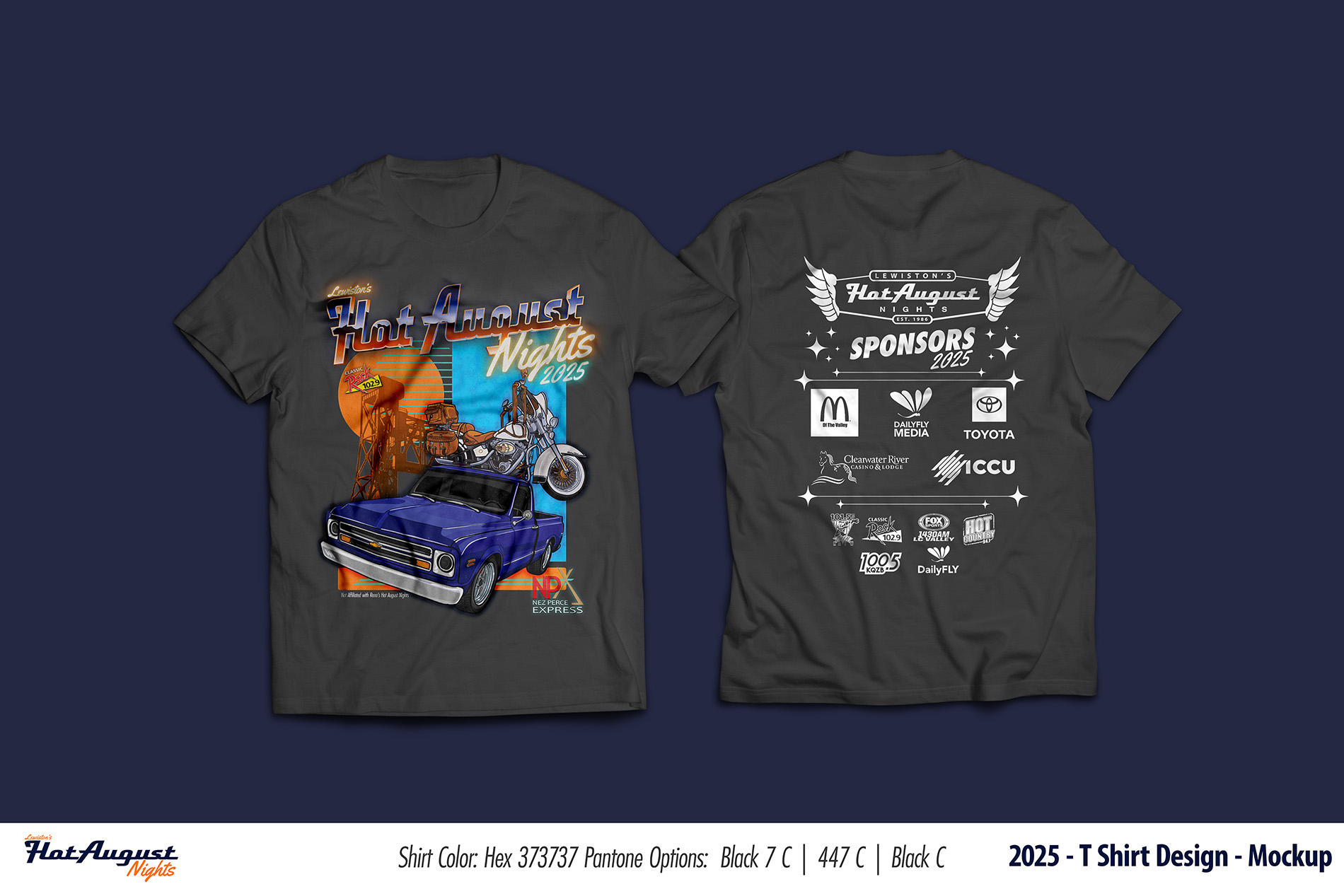
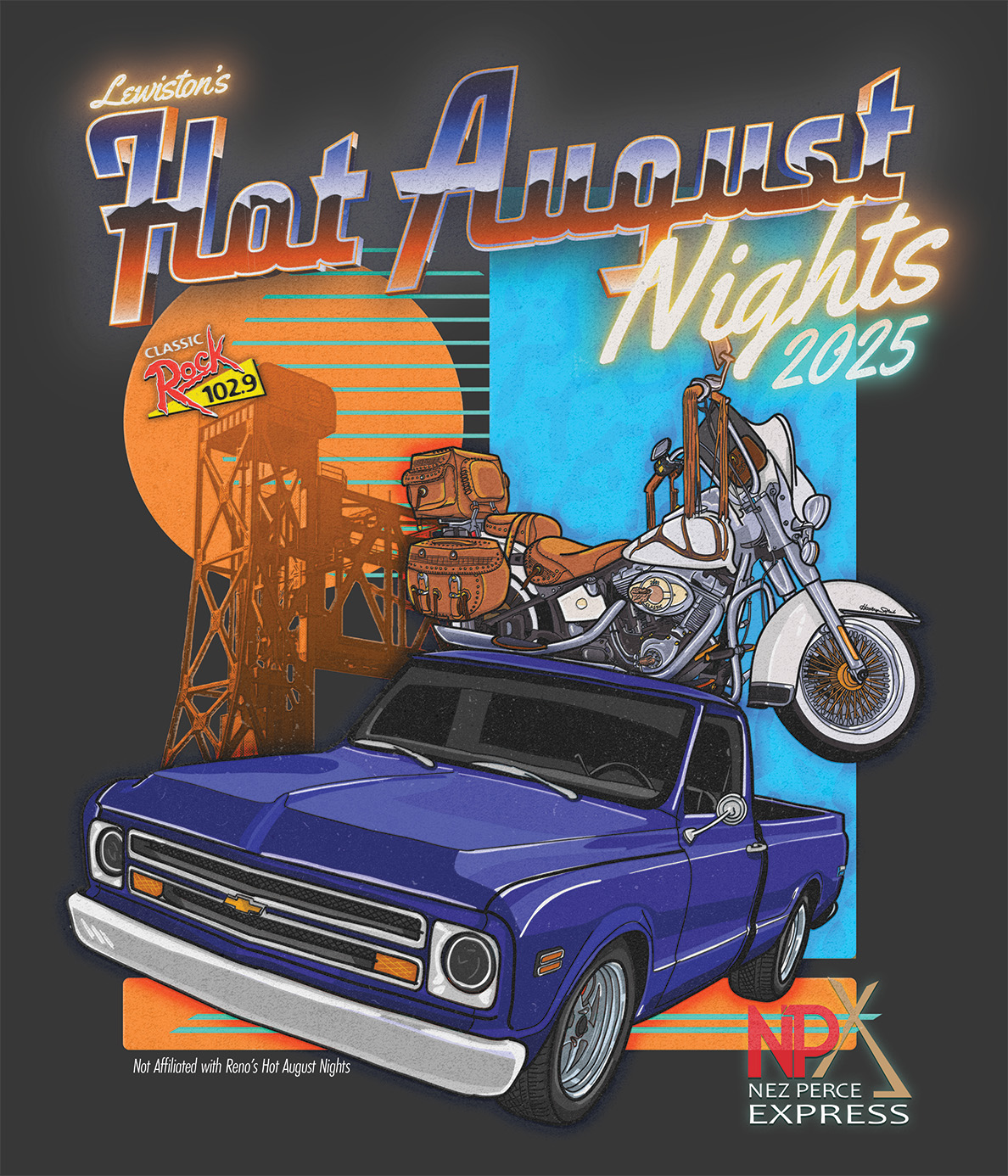
The centerpiece of the 2025 design was the event shirt, which served as a broad throwback to 1990s design concepts. The color palette was selected to evoke nostalgia while remaining aligned with the newly refreshed brand identity. A variety of methods were used in the design process, ranging from hand-drawing the vehicles featured on the shirt to assembling the layout in Photoshop. Within Photoshop, a series of grunge and glow effects were applied to create a worn, vintage aesthetic across both print and social media designs.
Open Cruise Pass
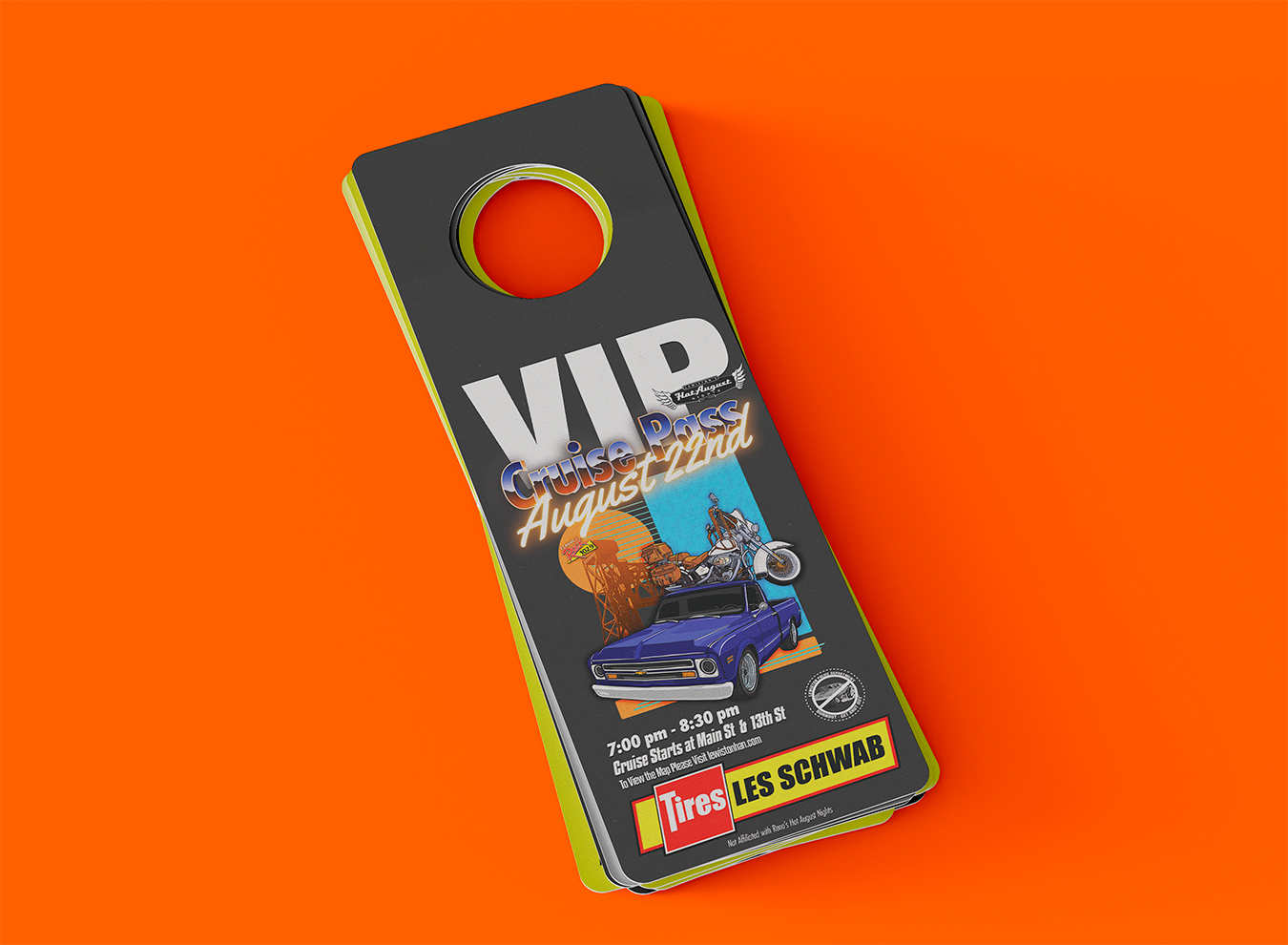
VIP Cruise pass
Shirt Design - Mockup
Cruise pass - mockup
Shirt design
Logo Refresh
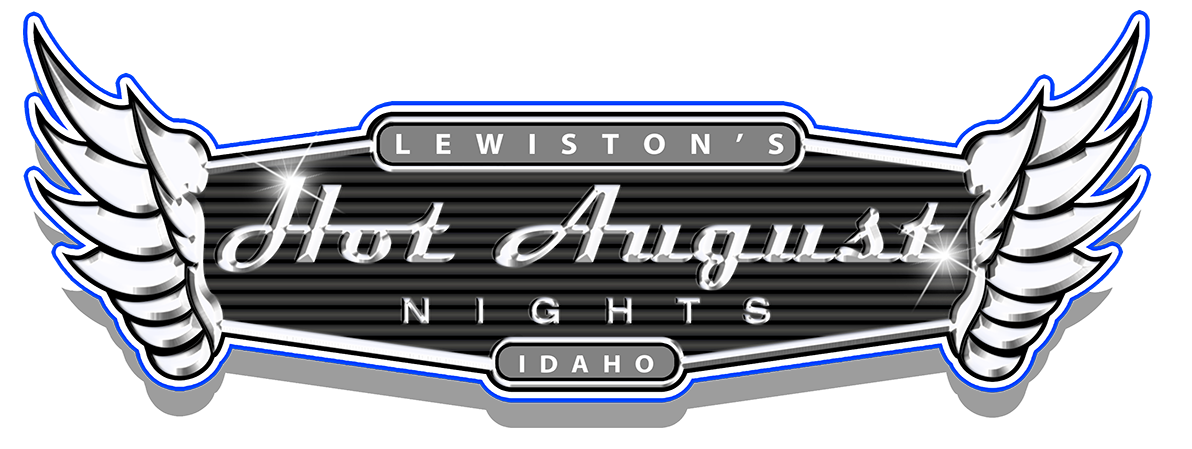
Legacy Logo
Logo Refresh
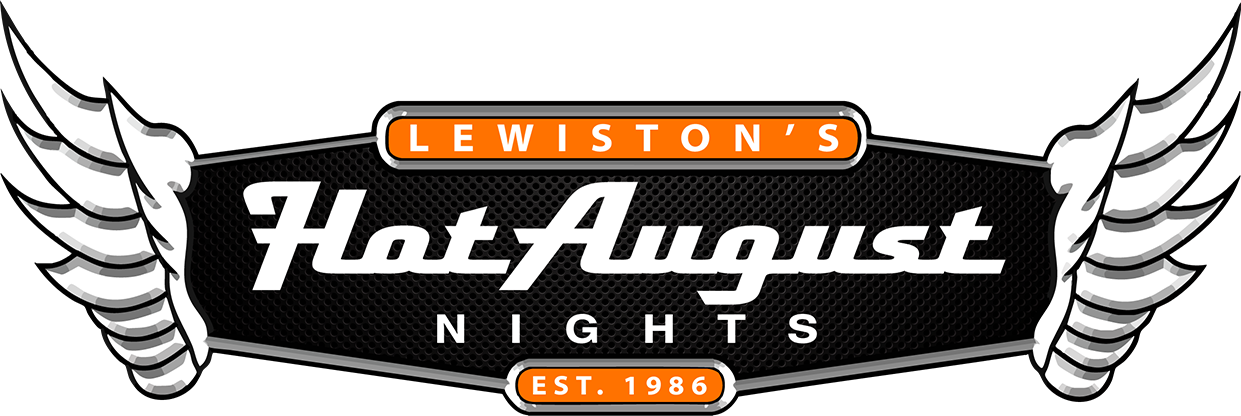

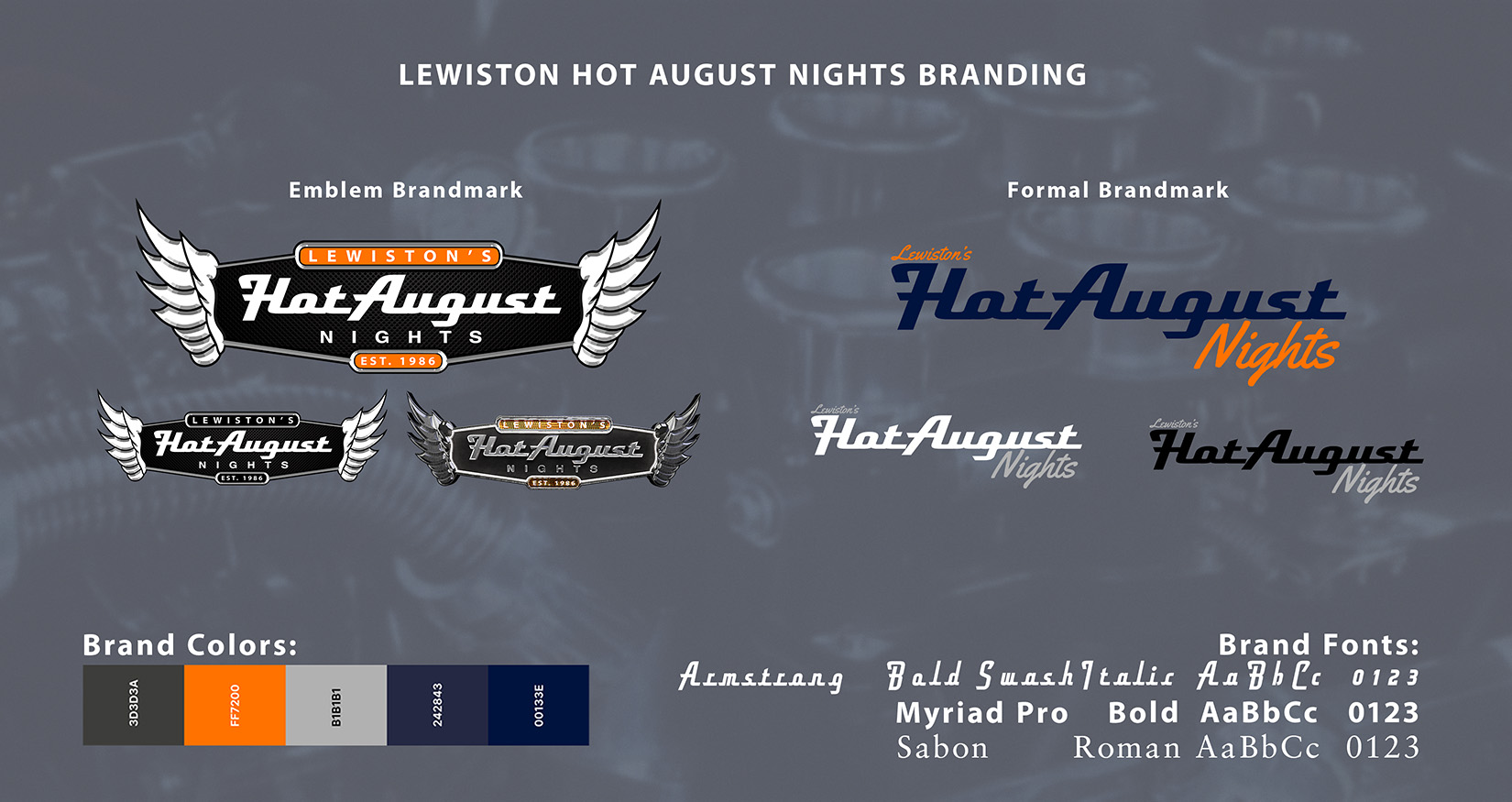
A major component of the brand refresh for Lewiston's Hot August Nights was a redesign of the event logo. The original logo had been created in the late 1990s, and as a result, none of the original design files or master assets were available. A core objective of the refresh was to preserve the integrity of the original logo without drastically altering its recognizable design.
To accomplish this, the base of the logo was recreated through a vector trace of the original artwork. The next step involved selecting typography that felt slightly more contemporary while still reflecting the character of the original design. The final font choice closely resembled the original lettering while offering a bolder visual presence. Reducing the amount of metallic styling within the logo also helped simplify and modernize the overall design. Lastly an alternative formal logo was designed which provides for broader use cases with future designs.